
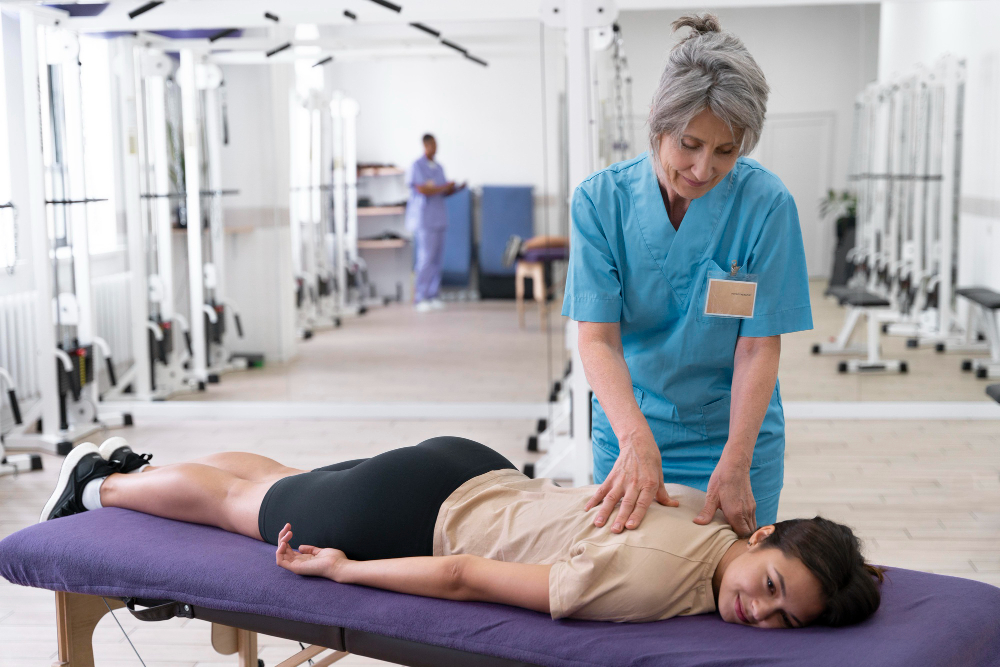
What Is Post-Surgical Spine Rehabilitation?
Post-surgical spine rehabilitation is a special recovery process after spine surgery. It helps your body heal, regain strength, and return to daily life. Usually, this program includes gentle exercises, education, and support from trained professionals. Because every surgery is different, your plan may be unique to your needs. Early rehabilitation can help you move safely and avoid problems.
Common Goals and Benefits
After spine surgery, you may wonder why rehabilitation is so important. In fact, it offers many benefits, such as:
Additionally, a good rehabilitation plan can boost your confidence and help you feel more in control of your recovery.
Typical Rehabilitation Timeline
Every person heals at a different pace. However, most post-surgical spine rehabilitation programs follow a general timeline:
Still, your doctor or therapist will adjust this plan based on your progress and type of surgery.
Key Recovery Tips and Best Practices
To heal well after spine surgery, you should follow some simple tips. For example:
Moreover, try to rest when you feel tired. But, do not stay in bed all day unless your doctor says so. Gentle movement can help prevent stiffness and blood clots.
Exercises and Activities to Support Healing
Safe exercises are a key part of post-surgical spine rehabilitation. Your therapist may suggest:
However, avoid heavy lifting, twisting, or bending until your doctor approves. Always ask before starting new activities.
Warning Signs and When to Seek Help
Sometimes, problems can happen during recovery. You should contact your doctor right away if you notice:
Early action can prevent serious complications. Therefore, do not ignore these warning signs.
Preventing Complications During Recovery
To lower your risk of problems, you can take a few extra steps. For instance:
Additionally, avoid smoking, as it can slow down healing and increase risks.
Frequently Asked Questions
Conclusion: Recovering from spine surgery takes time and care. For the best results, consult Dr. Shekhar Reddy for personalized recovery guidance after spine surgery.