
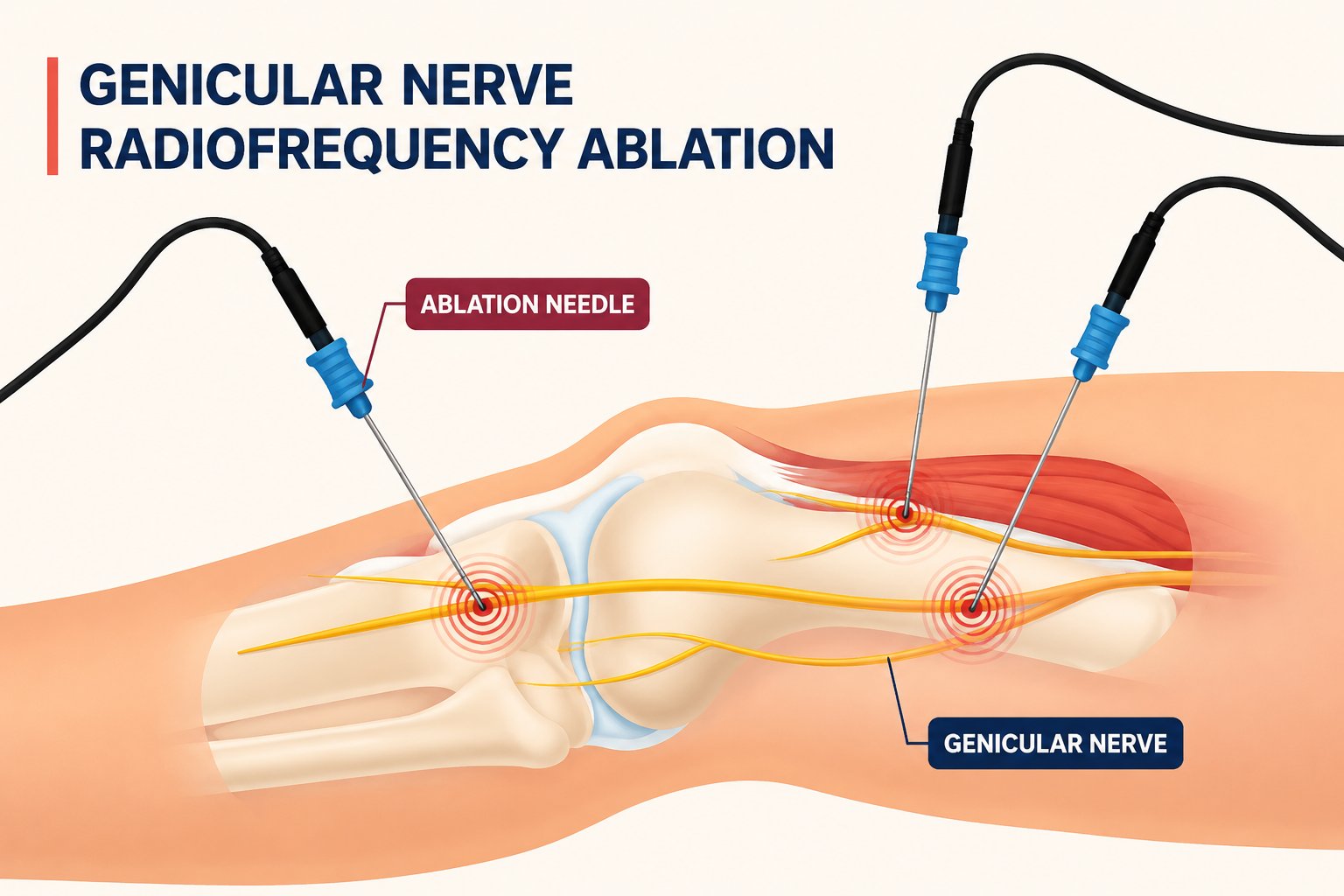
What Is Genicular Nerve Ablation?
Genicular Nerve Ablation is a minimally invasive knee procedure. It helps reduce knee pain, especially from osteoarthritis. Doctors use radiofrequency ablation to target small nerves around the knee. These nerves, called genicular nerves, send pain signals to the brain. By blocking these signals, the procedure can offer lasting pain relief. Many people choose this option when other treatments do not work well. For those seeking pain relief for osteoarthritis, this treatment may help.
Who Might Benefit from Genicular Nerve Ablation?
Not everyone with knee pain needs this procedure. However, it can help certain groups. For example, people who may benefit include:
Sometimes, people with pain after knee surgery may also benefit. Still, it is important to talk to a doctor to see if this is the right choice.
How Does the Procedure Work?
First, your doctor will numb the skin around your knee. Then, using X-ray or ultrasound guidance, thin needles are placed near the genicular nerves. Next, radiofrequency energy is sent through the needles. This energy heats and blocks the nerves, stopping pain signals. The whole process usually takes less than an hour. Most people go home the same day. Because it is a minimally invasive knee procedure, there are no large cuts or stitches.
Benefits and Risks
Like any medical treatment, Genicular Nerve Ablation has both benefits and risks. On the positive side, many people experience:
However, there are some risks to consider. For instance, possible risks include:
Although serious problems are rare, it is wise to discuss all risks with your doctor.
What to Expect Before, During, and After the Procedure
Before the procedure, your doctor will review your medical history. You may need to stop certain medicines. On the day of the procedure, wear loose clothing. During the procedure, you will be awake but comfortable. The doctor will numb your knee, so you should not feel pain. Afterward, you can usually walk out of the clinic. Some people feel mild soreness, but this goes away quickly. Most people return to normal activities within a day or two.
Recovery and Aftercare Tips
After Genicular Nerve Ablation, recovery is usually quick. To help your knee heal, consider these tips:
In most cases, pain relief starts within a few days. However, it may take up to three weeks for full results. If you notice swelling, redness, or fever, call your doctor right away.
Frequently Asked Questions
When to Consult a Specialist
If you have ongoing knee pain that does not improve with other treatments, it may be time to see a pain management specialist. Especially if you want to avoid surgery, Genicular Nerve Ablation could be an option. In many cities, including your area, specialists offer this procedure. Always talk to a qualified doctor to find out if this treatment is right for you.
For personalized advice, consult Dr. Shekhar Reddy to see if Genicular Nerve Ablation is right for you.